September 23, 2026
Connecting the Dots: Software.org Celebrates 12 Years of Supporting Girls Who Code

October 14, 2020
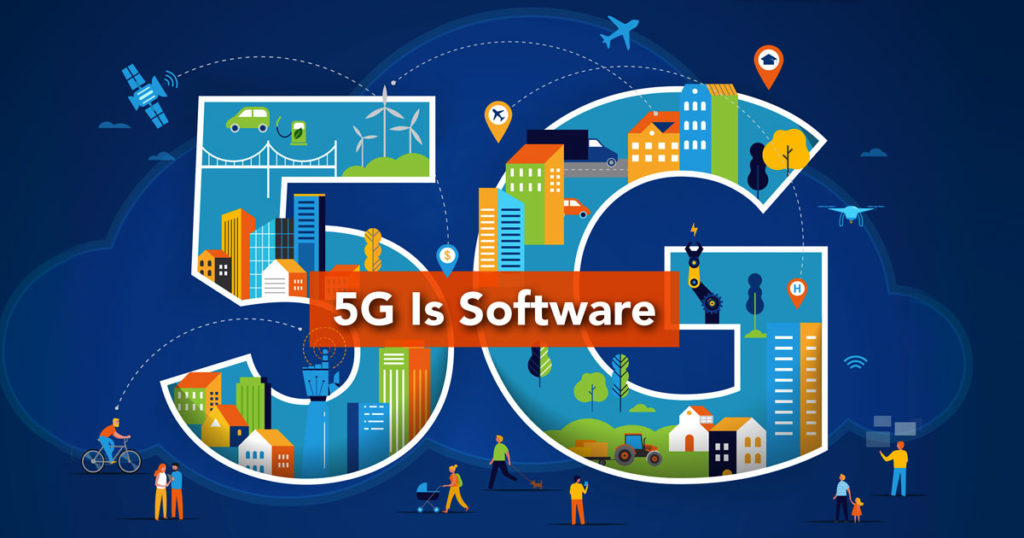
The much-anticipated promise of 5G and discussions of its key public policy implications are almost impossible to miss today. Fully realized, the next generation of mobile technologies will lead to much faster data speeds than today’s 3G and 4G offerings for businesses and consumers, enabling new economic opportunities as 5G is applied throughout the world.
And while almost everyone can agree that 5G will make significant changes to the landscape of wireless communications, one question tends to get lost in those discussions: What exactly is it about 5G technology that makes it so groundbreaking?
The answer is simple: Software and cloud technologies are integral to 5G’s most transformative capabilities, and software innovations potentially hold the keys to addressing crucial policy issues.
As wireless carriers and network operators ramp up deployment, 5G is having its moment in the policy spotlight. Governments, tech industry stakeholders, and consumers have grasped that our global telecommunications infrastructure is on the cusp of an unprecedented overhaul with the arrival of next-generation wireless networks.
5G has become a focal point for renewed debate across a diverse range of policy areas—from national security and international relations to more domestic concerns like rural access to broadband, the digital divide, and 5G’s potential impact on the economy and jobs.
Software.org: the BSA Foundation’s new report, “5G Is Software,” details the vital role that software technologies will play in 5G networks and the future of wireless communications. Traditionally, the networking and telecommunications sectors have been thought of as primarily the domains of hardware developers. New advances to virtualize network functions in both the core network and radio access network (RAN) using cloud-native, software-based architectures means software plays a more significant role in this space than ever before.
Here’s a preview of some of the findings from our report:
While there is certainly no shortage of ideas or enthusiasm for what 5G may bring, we are still in just the early phases of the 5G lifecycle and much work remains to be done. No one has yet developed the killer 5G app that will result in the “Oh, that’s what 5G is for” moment. However, even in this preliminary period before its potential is realized, this much is clear: Software technologies will be integral to 5G and the wireless industry from here on out.
To read the full report and follow Software.org’s work on 5G, please click here.
 Jake Morabito
Program Coordinator,
Software.org
Jake Morabito serves as Program Coordinator at Software.org: the BSA Foundation. In this capacity, he provides research, analysis, and project management support for the Foundation’s key organizational initiatives and events.