September 23, 2026
Connecting the Dots: Software.org Celebrates 12 Years of Supporting Girls Who Code

February 04, 2026
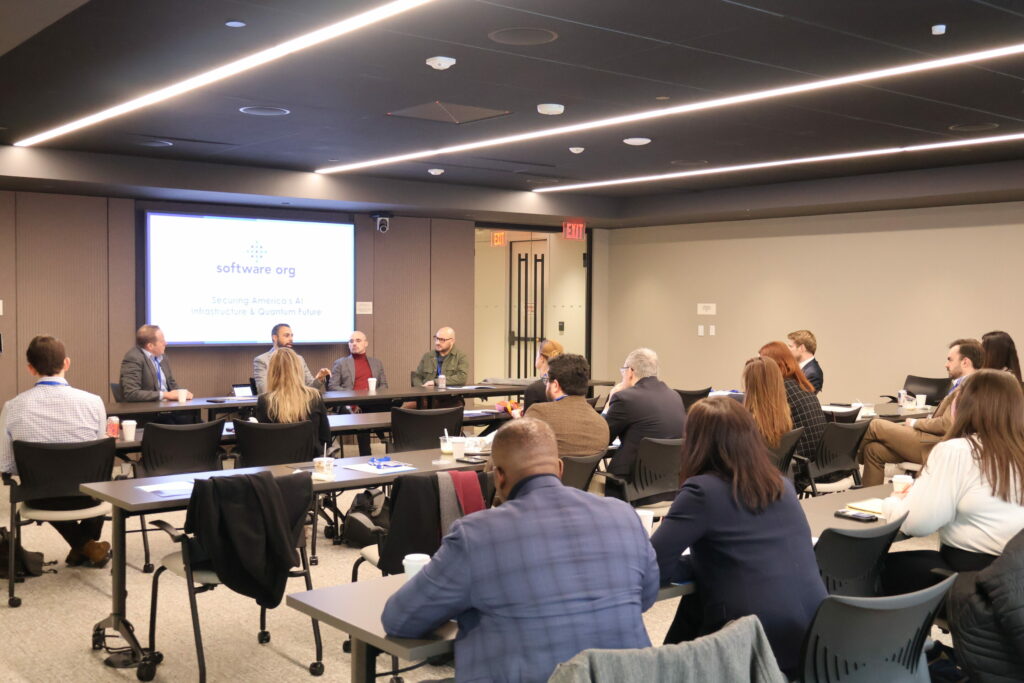
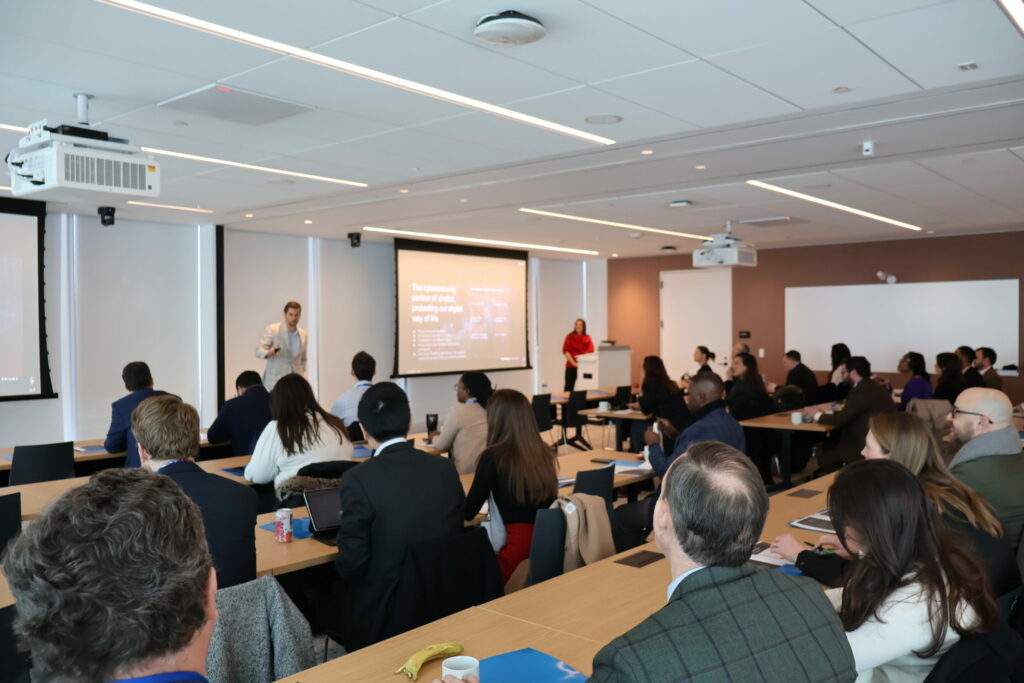
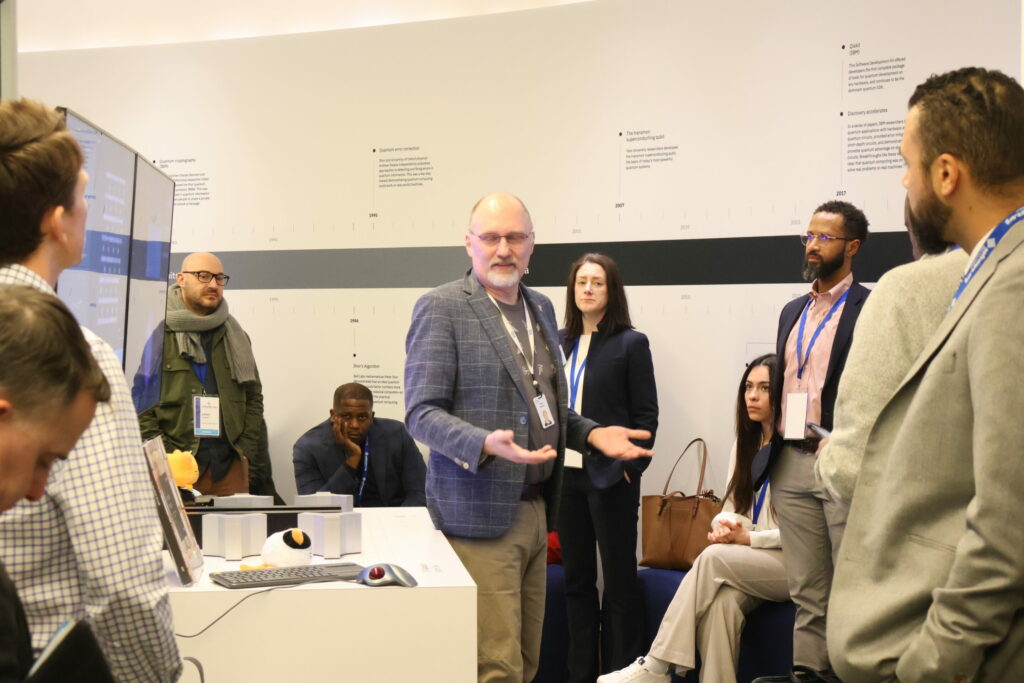
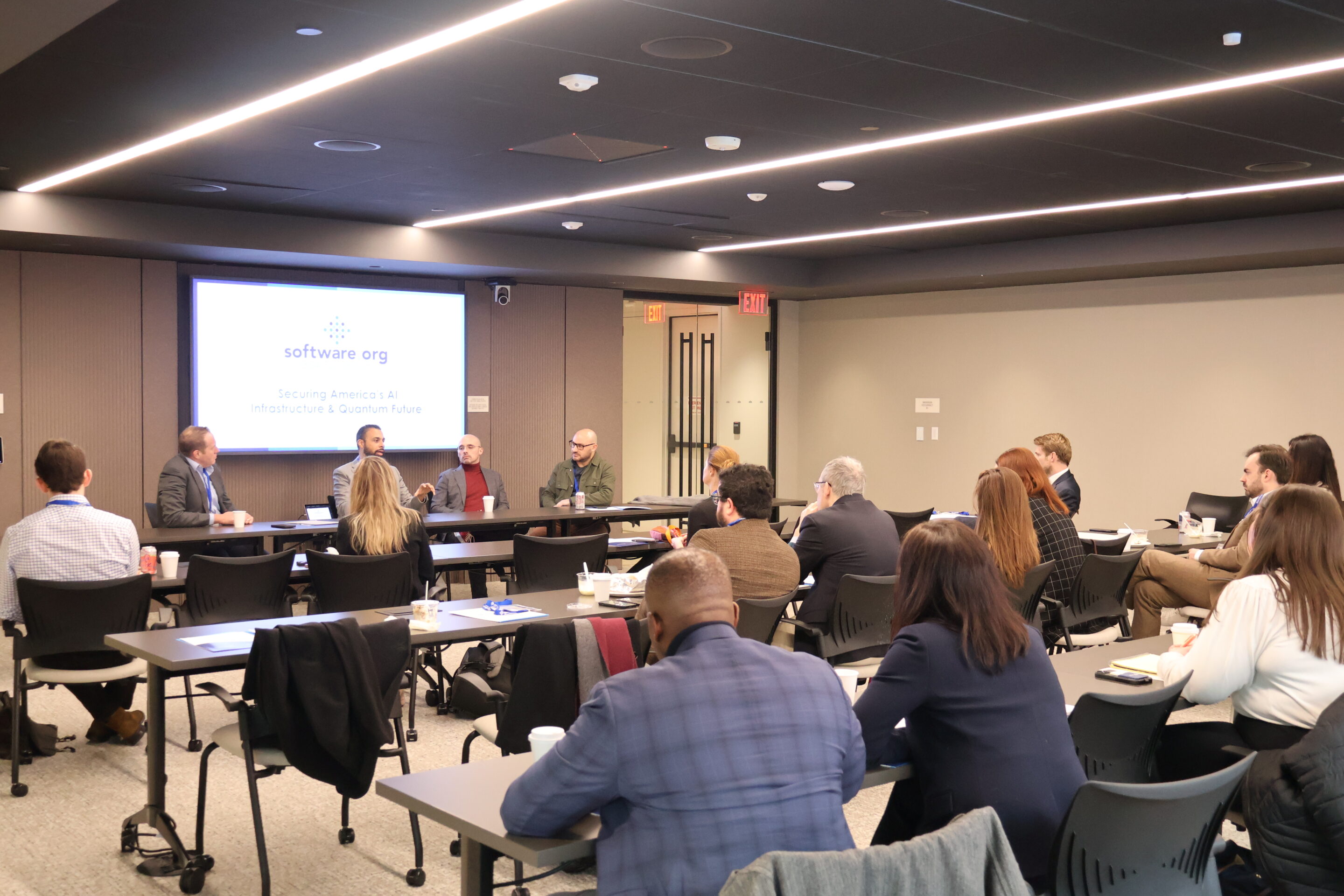
Capitol Hill, Administration, and foreign embassy staff joined Software.org: the BSA Foundation for a daylong seminar on “Securing America’s AI Infrastructure & Quantum Future,” featuring high-impact briefings from the Business Software Alliance (BSA) and its member companies.
Through visits to company offices and a series of themed discussions, those working on the front lines of technology policy heard directly from enterprise software leaders about the real-world implications of artificial intelligence (AI), cybersecurity, and quantum technologies.
Securing America’s AI Infrastructure & Quantum Future
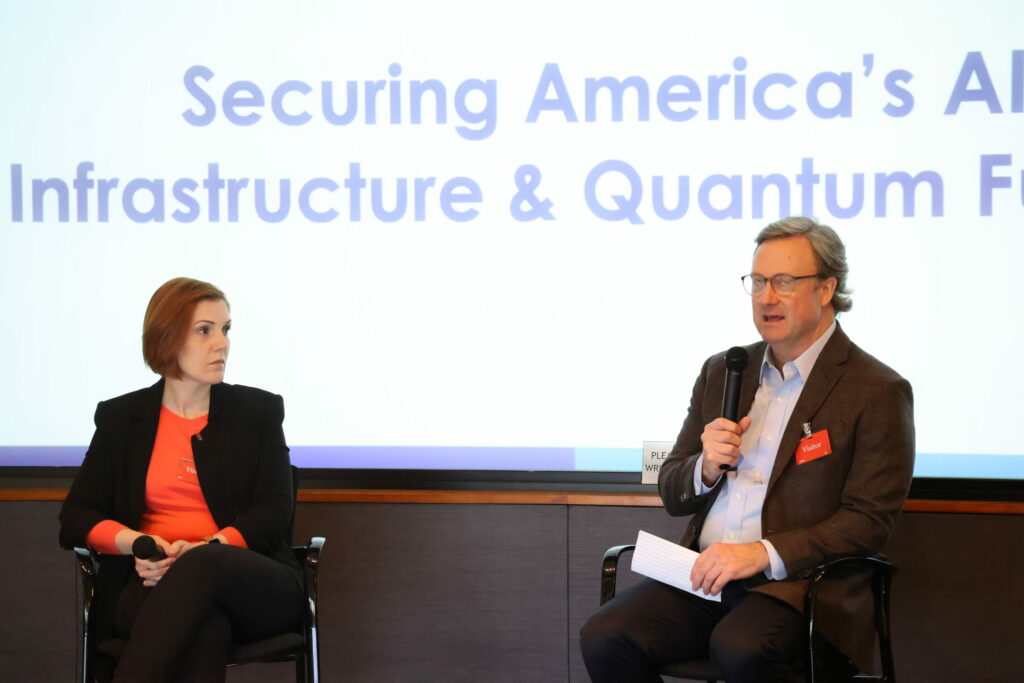
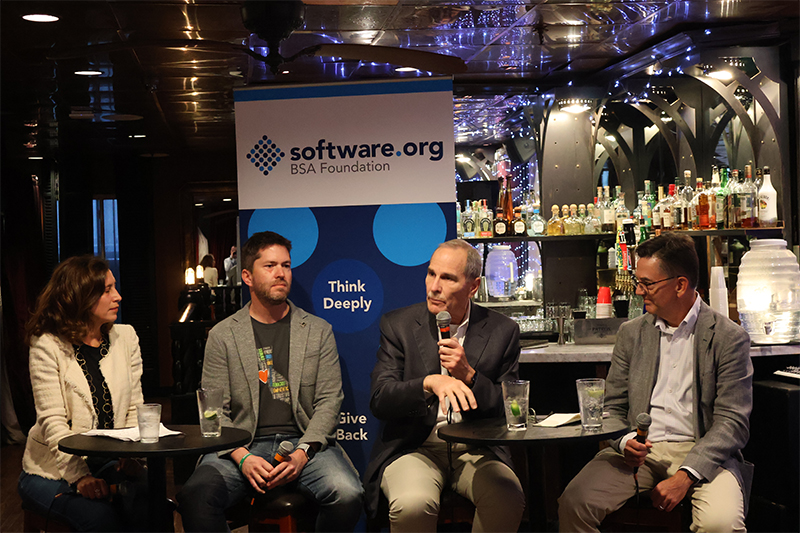
The program opened with a panel discussion focused on the core theme of the day: securing America’s AI infrastructure and quantum future. Panelists emphasized the opportunity — and responsibility — for policymakers to help set the trajectory for these technologies through trusted, sustained partnership with industry.
“The first-mover advantage on policy is critical. We’re already seeing it with AI, and similar dynamics are emerging in quantum,” said Daniel Lerner, Senior Director for National Security Government Affairs at Microsoft. “The advantage the United States brings is a robust technology ecosystem. But there are other countries pursuing these technologies through highly coordinated national efforts.”
Panelists consistently returned to collaboration between industry and government as essential to maintaining that advantage.
“Partnerships between industry and government matter because they are fundamentally trust‑building exercises,” said Ryan Hagemann, Global AI Policy Issue Lead at IBM. “That trust carries over into the enterprise business‑to‑business environment, which is absolutely critical for customers.”
Charles McCray, Director of Federal Affairs at Salesforce, underscored how that trust translates directly into customer confidence.
“For Salesforce, delivering trust and peace of mind to customers requires deep coordination across industry and with government,” McCray said. “That alignment is essential to how we lead.”
Henry Young, Senior Director of Policy at BSA, moderated the discussion and framed the stakes for policymakers in attendance.
“It’s difficult to overstate the importance of leadership in AI and quantum,” Young said.
AI Adoption & Security: We Can Do Both
Participants next traveled to Palo Alto Networks’ northern Virginia offices for a focused briefing on the cybersecurity implications of AI deployment.
“Basic, existing cybersecurity fundamentals still matter when we talk about securing AI systems,” said Daniel Kroese, Vice President of Public Policy and Government Affairs at Palo Alto Networks. “There is a strong and often understated bipartisan consensus that AI security and AI deployment must go hand in hand.”
Jessica Souder, an AI Security Specialist at Palo Alto Networks, delivered a technical briefing on AI security practices, including examples of how practitioners assess models for vulnerabilities and manage risks ranging from data exposure to prompt injection attacks.
“AI is software, but it’s a different kind of software that we need to protect as a core asset in cyberspace,” Souder said. “That’s why we emphasize ‘Secure AI by Design,’ which means building security in from the start, rather than retrofitting protections after deployment.”
Winning With Workforce in the Global AI & Quantum Race
A lunchtime conversation at Oracle’s northern Virginia offices explored the workforce challenges tied to building an AI-ready economy. Dr. Amarda Shehu, Chief AI Officer at George Mason University, joined Craig Albright, BSA Senior Vice President of US Government Relations, to discuss how higher education is adapting to fast-moving technological change.
Shehu noted that the fast pace of AI development along with uncertain consensus on what constitutes core “AI skills” makes it difficult to design traditional degree or certification programs. In response, George Mason University is embedding AI education across foundational courses and disciplines, rather than relying on a stand-alone degree program.
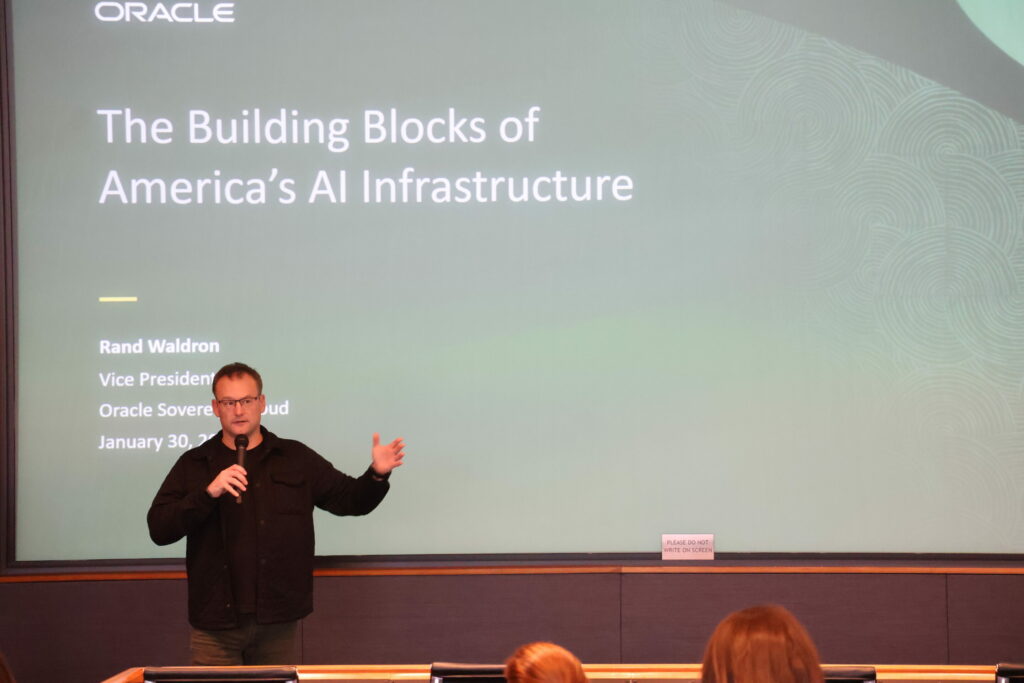
The session continued with a briefing from Rand Waldron, Oracle Vice President of Government, Defense, & Intelligence, who highlighted the infrastructure required to support AI and cloud adoption — in particular data centers — and how that infrastructure may evolve into the future.
Securing AI & Quantum Leadership
The program concluded at IBM’s Innovation Studio in downtown Washington, DC. Hassi Norlen, IBM Quantum Technical Ambassador and Engagement Leader, guided participants through the fundamentals of quantum computing — its history, current state, and implications for future computing and security.
As IBM advances quantum hardware, software, and applications, Norlen emphasized that quantum’s real‑world impact is arriving sooner than many expect.
“Our world will likely start changing this year as we identify problems that are quantum‑advantaged,” Norlen said. “That creates the opportunity to build quantum algorithms around real challenges — and to solve real‑world problems in entirely new ways.”
 Gideon Lett
VP & General Manager, Software.org
Gideon Lett serves as Vice President & General Manager of Software.org: the BSA Foundation, overseeing the Foundation’s programs, operations, and outreach.